

A leaking dishwasher, refrigerator line, sink supply, toilet, or upstairs bathroom can put hardwood floors and cabinets at risk fast. Homeowners searching for water damage restoration in Pleasanton, CA often want to know one thing first: can the floors and cabinets be saved? Sometimes they can. Sometimes replacement is the safer option. The difference usually comes down to how quickly the water is stopped, how deeply it traveled, and whether the affected materials are dried correctly.
Hardwood and cabinetry are valuable, but they are also vulnerable. Wood absorbs moisture, swells, cups, separates, stains, and can develop mold if damp conditions remain. Cabinets can trap water under toe-kicks, behind backs, and inside particleboard or plywood layers. A room may look mostly dry from above while water remains under flooring or behind cabinet bases.
Steadfast Restoration Services provides professional water damage restoration for Pleasanton homeowners who need fast, practical help after a leak or overflow. Local homeowners can also review Steadfast’s Pleasanton service area page for restoration support in the area.
Water Damage Restoration in Pleasanton, CA Begins With Fast Control
The first priority is to stop the source. Shut off the appliance, fixture, or water valve if it is safe. If water is coming from an upstairs room, avoid standing under sagging ceilings or light fixtures. If electrical outlets, cords, or panels are wet, stay clear and call for professional help.
After the source is controlled, remove dry belongings from the area. Towels can help with standing water, but do not assume surface cleanup is enough. Water can move under baseboards, between flooring layers, into wall cavities, and beneath cabinets. The longer it stays there, the more likely hardwood and cabinets are to swell or fail.
Calling a restoration company early gives the home the best chance of saving materials. Professional extraction, moisture mapping, drying equipment, and careful monitoring can make a major difference.
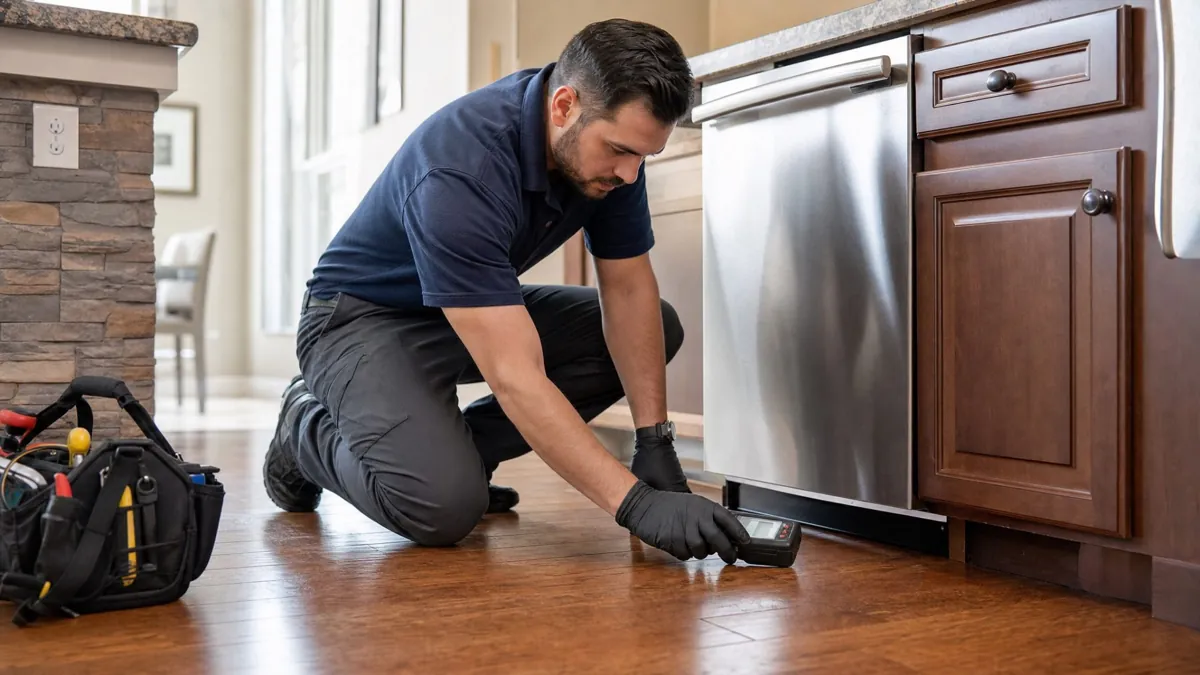
Why Hardwood Floors Need More Than Air Drying
Hardwood floors may look dry on top while moisture remains below the boards. That hidden moisture can cause cupping, crowning, buckling, discoloration, or gaps. Engineered wood and laminate products can be even more sensitive depending on the core material and how long the water sat.
Opening windows and running household fans is not a reliable drying plan. In some cases, uncontrolled air movement may dry the surface too quickly while moisture stays trapped underneath. Professional drying uses moisture readings, dehumidification, air movement, and sometimes specialty floor drying systems to remove moisture more evenly.
The goal is not simply to make the floor feel dry. The goal is to return the affected materials to appropriate moisture levels and prevent secondary damage. That requires measurements over time, not guesswork.
How Cabinets Trap Water After a Leak
Cabinets are one of the most overlooked parts of kitchen and bathroom water damage. Water can run under the cabinet base, soak the toe-kick, enter unfinished edges, or wick into side panels. Particleboard components may swell quickly and lose structural integrity. Even solid wood or plywood cabinets can hold moisture in joints, backs, and hidden cavities.
A restoration technician may remove toe-kicks, drill small drying access points where appropriate, or use targeted airflow to reach trapped moisture. In some cases, cabinets can be dried and saved. In others, contaminated water, severe swelling, delamination, or mold risk may require removal.
Homeowners should avoid sealing, caulking, or reinstalling trim until the area has been checked. Closing the space too soon can trap moisture and create a larger problem later.
Clean Water, Gray Water, and Contaminated Water Matter
Not all water damage is the same. A supply line leak is different from a dishwasher overflow, toilet backup, or sewage issue. Clean water may allow more materials to be dried and restored if handled quickly. Gray water or contaminated water may require removal of affected porous materials for health and safety reasons.
This is one reason DIY cleanup can become risky. The visible water is only one part of the decision. The source, materials affected, duration, and contamination level all matter. A professional restoration company can explain what can be dried, what should be removed, and what needs documentation for insurance.
What Homeowners Should Not Do
Do not wait several days to see if the floor improves. Wood damage often gets worse during that window. Do not place rugs back over damp flooring. Do not paint swollen cabinet panels or reinstall baseboards before drying is complete. Do not run heat aggressively without guidance, because excessive heat can damage wood and finishes.
Also avoid tearing out materials before documenting the damage. Take photos and videos of the source, wet areas, affected floors, cabinets, baseboards, and personal property. If insurance may be involved, documentation helps create a clearer record.
What Steadfast Does During Water Damage Restoration
Steadfast starts by inspecting the affected area and identifying where the water traveled. The team can extract standing water, set drying equipment, remove unsalvageable materials, and monitor moisture until the structure is ready for repair. When hardwood floors or cabinets are involved, the drying plan should be careful and material-specific.
If repairs are needed after mitigation, Steadfast can also support restoration and rebuilding. That matters because water damage is not finished when the fans turn off. Homeowners need flooring, trim, drywall, cabinets, or finishes restored correctly so the house feels whole again.
Protecting Your Pleasanton Home From Repeat Damage
Once the immediate damage is handled, take prevention seriously. Replace old supply lines, inspect dishwasher and refrigerator connections, watch for staining under sinks, and check caulking around tubs and showers. If a floor has warped or a cabinet smells musty, do not ignore it. Those are signs moisture may still be present.
Pleasanton homeowners should also keep the contact information for a restoration company handy. Fast response is easier when you are not searching during an emergency.

What to Expect During the First Restoration Visit
During the first visit, the restoration team should ask what happened, when it happened, and what areas were affected. Then they should inspect beyond the obvious wet spot. That may mean checking adjacent rooms, lower levels, baseboards, cabinet interiors, and flooring edges. The point is to build a drying plan based on where the water actually traveled.
Homeowners should expect clear communication about what can be attempted, what may need removal, and what needs to be monitored. Good restoration work is measured, not guessed. If hardwood or cabinets are involved, daily or follow-up moisture checks may be needed before anyone can say the materials are ready for repair.
Call Steadfast for Water Damage Restoration in Pleasanton, CA
If water has reached hardwood floors, cabinets, drywall, or baseboards, call Steadfast Restoration Services at (925) 966-1206. Professional water damage restoration in Pleasanton, CA can reduce damage, support insurance documentation, and help protect the materials that make your home livable.
FAQs
Can hardwood floors be saved after water damage?
Sometimes. It depends on the water source, how long the floor was wet, the type of wood, and whether drying starts quickly.
How long does it take to dry wood floors?
Drying time varies, but it often takes multiple days with professional equipment and moisture monitoring.
Should cabinets be removed after a kitchen leak?
Not always. Some cabinets can be dried in place, but swollen, contaminated, or mold-affected cabinets may need removal.
Is a dishwasher leak covered by insurance?
Coverage depends on the policy and cause of loss. Sudden accidental leaks are often treated differently from long-term leaks.
Why does my kitchen smell musty after cleanup?
A musty smell may mean moisture remains under flooring, behind cabinets, or inside walls.
Image Plan
1. Featured Image Prompt: A Pleasanton kitchen with hardwood floors after a controlled water leak cleanup, restoration technician setting drying equipment, realistic and clean, no logos. 2. Inline Image Prompt: Close view of drying equipment aimed near cabinet toe-kicks after water damage, professional restoration scene in a bright kitchen. 3. Inline Image Prompt: Technician using a moisture meter on hardwood flooring near a dishwasher, realistic homeowner restoration inspection image.
Need help now? Call (925) 966-1206 for 24/7 emergency response in Pleasanton, Livermore, Dublin, and the Tri-Valley, or request a free estimate.


